
Primary and Secondary Markets Explained: Issuance and Trading
Primary and secondary financial markets serve different functions. The primary market finances an issuer through newly issued securities, while the secondary market allows investors to exchange existing securities and creates continuing price discovery. Understanding the distinction prevents common mistakes when interpreting IPO proceeds, new bonds and daily stock-exchange trading.
These markets are connected. Investors are generally more willing to subscribe to an issue when they expect reasonable resale opportunities, while active secondary trading helps set the yield or valuation at which future issuance may occur. Neither process guarantees profits or permanent liquidity.
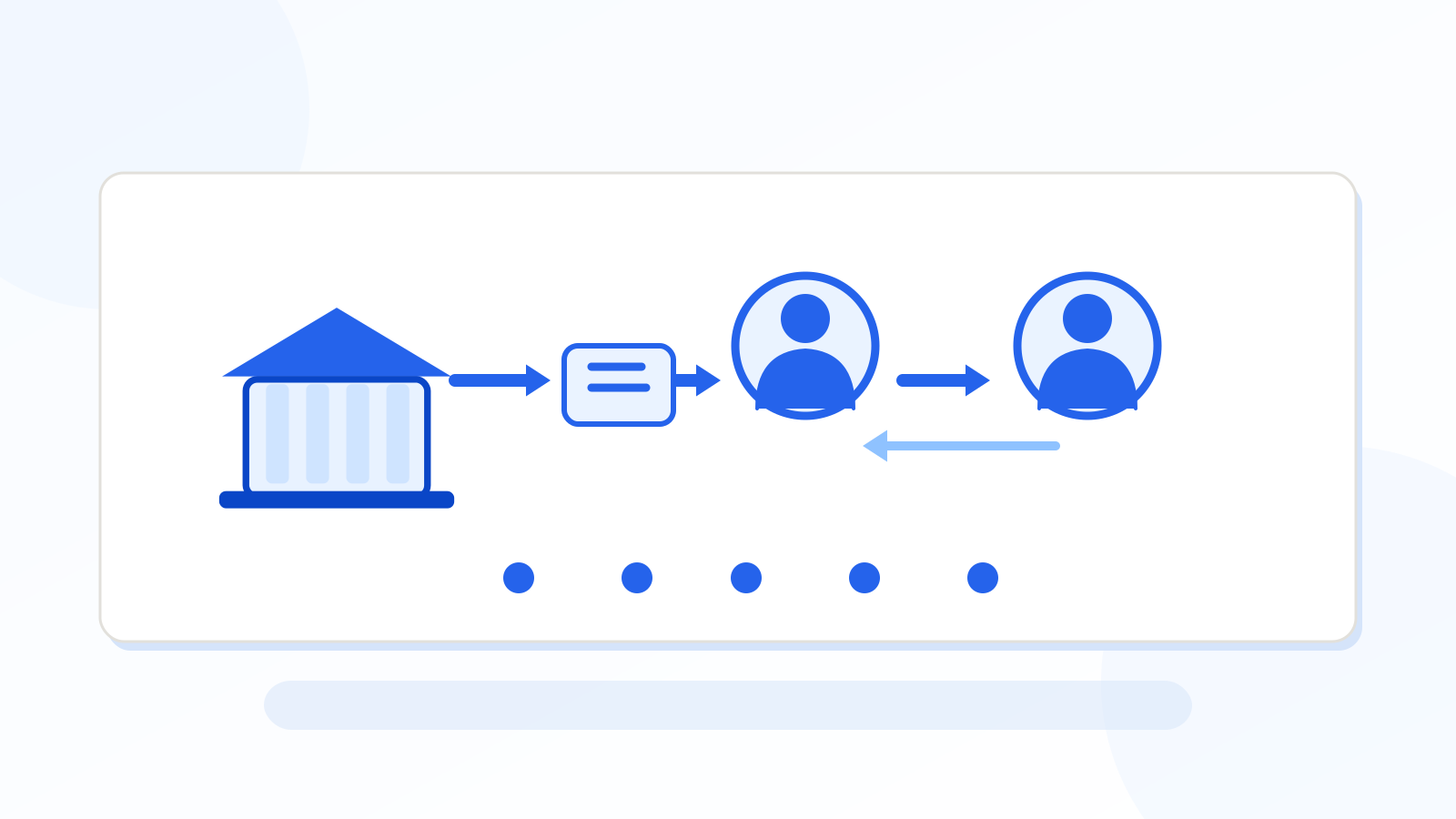
What is the primary market?
The primary market is where newly created securities are first sold to investors under an issuance process. An issuer can raise financing by selling newly issued ordinary shares or debt obligations. The sale’s structure depends on the jurisdiction, issuer, underwriting arrangements and security type. Equity offerings, corporate bond syndications and government auctions are all primary-market activities.
For a simplified example, a company issuing one million new shares at £10 each raises £10 million gross before underwriting and other transaction expenses. The new investors receive issued shares under the offering terms. Later secondary trades in those same shares generally exchange ownership without paying new subscription proceeds to the company.
What is the secondary market?
The secondary market is where investors buy and sell securities that have already been issued. An existing shareholder selling shares on the exchange receives cash from a buyer, not from the issuing company under an ordinary secondary transaction. Bondholders can similarly sell debt to another investor without changing the issuer’s contractual coupon or maturity terms.
Secondary trading provides an exit mechanism and helps establish market prices. However, an instrument listed on an exchange does not guarantee that meaningful buying interest exists at every moment. Some large-cap equities trade constantly; smaller corporate bonds can be very difficult to sell without a significant price concession.
Why the two markets depend on each other
Secondary-market liquidity supports primary financing because investors are more willing to subscribe to new securities if there is a reasonable prospect of reselling them. A company entering the stock market can benefit from the expectation that a transparent market will value its shares. Strong demand for existing government bonds may also support the financing conditions for new debt issuance.
The reverse is also true: new issuance changes the available supply of securities and can affect valuations in the secondary market. Yet market demand is uncertain. The existence of a secondary venue does not give subscribers a guaranteed resale price or protection against the issuer failing.
Initial public offerings explained
An initial public offering (IPO) is a process through which a company first makes shares publicly available under applicable listing and offering rules. It may involve issuing new shares, existing holders selling shares, or a combination. Only the portion consisting of newly issued company shares raises fresh equity proceeds for the issuer; existing shareholder disposals generate proceeds for those sellers.
During the offering, advisers help prepare disclosures, assess demand and determine offering structure. The first trading price after listing can be above or below the subscription price. A high initial price does not prove a company’s long-term prospects, and an IPO investor is exposed to valuation, disclosure and liquidity risks.
Primary versus secondary shares in an IPO
Suppose a fictional IPO offers 12 million shares at £8 each. Eight million are newly issued by the company, while four million are existing shares sold by a founder. Gross proceeds are £96 million overall. The company receives £64 million before expenses, and the founder receives £32 million before applicable costs or taxes.
Calling the whole £96 million “new capital raised for the company” would be inaccurate. This difference matters when interpreting press headlines about IPO sizes. A prospectus normally explains which parties sell, the intended use of proceeds and the resulting share structure.
Underwriters and book-building
Underwriters or bookrunners may coordinate an offering, gather expressions of investor demand and assist with pricing and allocation. In some offerings a firm commits capital under specified underwriting conditions; in others it acts on a best-efforts or agency basis. The contractual obligations vary and should not be assumed from the word “bank” alone.
Book-building uses investor indications of size and price to inform the issue terms, but some expressions are non-binding or conditional. Allocation can depend on order quality, issuer objectives and the selected method, so investors are not guaranteed to receive their requested quantity.
Follow-on equity issuance and dilution
Companies already listed on an exchange may issue additional shares to raise financing through rights offerings, placings or other methods. New shares can increase the denominator over which profits or voting rights are spread. Existing investors may have rights or opportunities to participate, depending on the issuance terms and governing law.
For example, a company with 100 million shares issues 20 million additional shares. A holder retaining one million shares sees their ownership percentage fall from 1.00% to approximately 0.833%, assuming no participation or other changes. But the company also receives funds, which may create value. Issuance should be evaluated economically rather than treated as automatically good or bad.
Corporate bond issuance
A company can sell new debt securities with specified coupon, maturity, seniority and covenants. Primary-market demand influences the yield or price offered. In a fixed-rate issue, a bond’s coupon is a contractual payment measure, whereas its yield also depends on the price paid and remaining cash flows.
When the bonds begin trading, their secondary price moves with government yields, credit spreads and liquidity. The issuer generally continues owing the contractual payments regardless of the new market price. Learn Bond Prices and Yields Explained for worked cash-flow calculations.
Government bond auctions
Sovereign debt managers commonly sell new securities through auctions under public rules. Investors or eligible intermediaries submit bids specifying the required yield or price, depending on the security and process. The allocation method may be uniform-price or another design and differs between markets and instrument classes.
UK gilt auctions and US Treasury auctions should not be described as identical mechanisms. Bonds can subsequently trade between investors in the secondary market, where their yields respond to changes in policy expectations, fiscal supply and demand. See Government Bonds Explained.
New-issue pricing and concessions
Issuers and syndicates consider prevailing comparable securities, interest rates and the appetite of investors for a new issue. Corporate debt sometimes offers a yield premium relative to secondary-market comparables, called a new-issue concession, to encourage participation. The premium is not guaranteed and may be absent under strong demand.
Comparisons should align currency, maturity, seniority, credit quality, coupon structure and options. A higher yield may simply compensate for greater risk rather than represent a genuine bargain. Liquidity expectations for a new bond can also differ from an established benchmark issue.
Price discovery before and after issuance
During primary issuance, the offer price or yield emerges through the chosen marketing and allocation method. After listing or issuance, the secondary price comes from ongoing buyer and seller interaction. The two prices can differ immediately because the investor base, news, market conditions and remaining allocation demand change.
An IPO that opens above its offer price may have been conservatively priced, may attract speculative demand or may have other price-moving influences. It cannot be concluded that every subscriber earned the opening premium because allocation, trading access, lockups and costs differ.
Why exchange listings do not guarantee liquidity
Listing means a security is admitted to a venue under particular rules, not that a buyer will always provide a firm bid at the last displayed price. Order-book depth varies by market and instrument. A large sell order can move through several price levels, leaving the seller with a lower average execution price than the headline quote.
Bond secondary markets can be particularly dealer-mediated, and a quote may be indicative rather than executable for a requested size. Read Market Liquidity Explained to assess actual exit conditions.
Investors, issuers and intermediaries have different objectives
In a primary offering, the issuer generally seeks sustainable financing, while investors assess valuation, future returns and risks. Syndicates may earn fees and take defined underwriting exposures. In secondary markets, investors can trade for rebalancing, risk management, tactical views or changes in their own liabilities.
A pension fund might buy a new thirty-year bond to match future pension commitments; another investor might sell the same type of debt to meet cash needs. Both can act rationally despite taking opposite sides, because investment horizons and constraints are different.
Market efficiency and information
Widely followed public markets can incorporate information rapidly, but that does not imply perfect forecasting. New earnings guidance, policy changes or unexpected issuance terms may require immediate price adjustments. Market prices represent the terms at which participants can transact under prevailing conditions, rather than a permanent fundamental value.
Primary investors evaluate prospectus disclosures and allocation terms, whereas secondary investors consider subsequent information and liquidity. Risks can change materially after issuance. A security that was attractive at the offering price may be unattractive after a substantial rally, and vice versa.
Lockups and insider selling
Some offerings restrict when founders or other shareholders can sell under lockup agreements. The schedule, exceptions and legal enforceability depend on offering terms. Expiry of a lockup can increase potential transferable supply, though it does not guarantee actual selling or a price fall.
Analysts should examine the number of securities that may become available, holders’ incentives and secondary depth. Publicity around lockup expiry can mean the market has already priced part of the expected pressure. Treat calendar events as hypotheses requiring evidence.
Secondary-market trading and corporate finance decisions
A strong secondary share price can influence a company’s ability to raise further capital, compensate employees with shares or make share-based acquisitions. Lower required bond yields can make refinancing more attractive, but a firm still needs access to willing lenders or investors and must consider legal and financial covenants.
The secondary market affects primary-market financing conditions indirectly even though ordinary secondary transactions do not pay the company new proceeds. This linkage is one reason market valuations matter to management teams and economic policymakers.
Debt issuance versus bank borrowing
A borrower can obtain finance from bank loans or marketable bonds, sometimes using both. A bank loan is not necessarily sold broadly to investors on issuance, and debt terms may be negotiated privately. Bonds can widen the creditor base and give investors tradeable claims, but also involve issuance requirements, fees and ongoing reporting.
The choice depends on company size, flexibility, cost, maturities, covenant terms and investor demand. It is inaccurate to assume every business can raise bonds directly in public markets or that all borrowed funds are interchangeable.
How to evaluate a new offering
Read the issuer’s financial statements and securities documentation. Identify which securities are new and which are sold by existing holders. Review use of proceeds, dilution, contractual rights, dividend or coupon terms, ranking and potential calls. Compare the offer valuation with similar issuers while recognising business-specific differences.
Do not treat an allocation as proof of quality. Evaluate whether secondary liquidity is likely to be sufficient and whether the security’s risks match the assumed holding period. An offering can be oversubscribed while still delivering a poor subsequent investment outcome.
Primary versus secondary market worked example
Assume a fictional company issues 5 million new shares at £12 to raise £60 million gross. An investor buys 1,000 newly issued shares for £12,000. Two months later that investor sells 1,000 shares to a second investor at £14, receiving £14,000 before costs and taxes. The company does not receive the secondary buyer’s £14,000 under an ordinary exchange transaction.
The seller has a £2,000 gross gain, but the secondary buyer now bears the future risks. If the price later falls to £9, the second investor faces a £5,000 unrealised loss on those 1,000 shares. The original company’s financing raised and the investors’ trading returns are distinct economic events.
Market-wide implications
Primary markets channel new capital toward businesses and governments, while secondary markets distribute ongoing risk and liquidity needs. Both are sensitive to monetary conditions and investor confidence. During financing stress, underwriting commitments can become harder to arrange and secondary spreads can widen, making new issuance more expensive.
A professional market analysis therefore monitors issuance calendars, credit spreads, IPO activity, redemption demand and the depth of existing securities. Each indicator provides context, not a standalone market direction prediction.
Primary versus secondary markets: comparison
| Feature | Primary market | Secondary market |
|---|---|---|
| Security | Newly issued claims | Existing claims |
| Cash recipient | Issuer or seller as specified in offer | Selling investor in an ordinary trade |
| Common example | IPO, bond auction, new debt syndication | Trading listed shares or outstanding bonds |
| Price formation | Offering and allocation process | Ongoing bid and offer interactions |
| Main investor risk | Initial valuation, disclosures, allocation | Market price, liquidity and counterparty risks |
Simplified comparison; IPOs can combine issuer share issuance and existing-holder disposals.
Why secondary-market prices influence future funding costs
If an issuer’s outstanding bonds trade at considerably higher yields than when they were first issued, investors may demand a similarly high return to purchase new debt from that issuer. This can increase the cost of refinancing maturities, even if the original bond coupons remain unchanged. The effect depends on credit quality, contract terms, market conditions and the maturity of the proposed new borrowing.
For equity issuance, a lower trading share price means the company may need to issue more shares to raise a given amount of cash, increasing potential dilution. Suppose a business seeks £20 million: at £10 a share it would need two million new shares, while at £5 it would need four million, ignoring costs and legal considerations. Secondary prices therefore influence primary financing options without paying new proceeds directly to the issuer.
Why new issuance can change secondary-market risk
A large issuance can affect existing investors through dilution, increased debt leverage or a change in the issuer’s capital structure. But the use of proceeds may also improve liquidity or fund productive assets. The same headline issuance amount can have very different implications depending on whether it refinances expensive debt, funds expansion or merely covers ongoing losses.
Before describing an offering as beneficial or harmful, identify the issuer’s existing liabilities, contractual seniority of new securities and any rights of current holders. A bond issue ranking ahead of existing unsecured claims may change expected recoveries in a restructuring even when total enterprise value is unchanged.
Frequently asked questions
Does a company receive money when its shares trade daily?
Ordinarily no. Existing-share secondary trades exchange cash between investors. The company raises new cash when it issues new securities under applicable terms.
Is an IPO only new company shares?
Not necessarily. It can include new shares, existing shares sold by holders or both.
Does a bond issuer receive cash from every resale?
No. Later ordinary trades transfer the existing debt claim between investors without new issuer borrowing proceeds.
Are primary offerings automatically cheaper than secondary shares?
No. A new issue’s pricing depends on valuation, demand and risk, and can subsequently rise or fall.
Why is the secondary market important to capital raising?
Potential liquidity can encourage investors to participate in issuance, but actual resale conditions remain uncertain.
Related Financial Markets Education
Explore financial markets and asset classes, market participants, and the trading and settlement lifecycle to follow a security from issuance through ownership transfer.
Sources and further reading
- Bank of England — Financial Markets
- AQA — Money, Capital, Primary and Secondary Markets
- SEC Investor.gov — Investing Basics
Important notice: General financial education, not a recommendation to subscribe for or trade a security. Every investment can lose value, and new issuance can carry material valuation, disclosure and liquidity risks. Numerical examples are hypothetical.