
Trading Mechanics Explained: Orders, Clearing, Settlement and Margin
A financial transaction involves more than pressing Buy or Sell. Orders must be routed and executed at available prices, contractual obligations may be cleared through intermediaries, and cash and securities must settle under the rules of the relevant market. Derivatives can also require collateral and daily margin adjustments, creating risks that differ from owning an unleveraged security.
This guide explains common order types, slippage, clearing, settlement, T+1 and T+2 calendars, margin and custody. The UK is preparing for a securities settlement transition on 11 October 2027; this article distinguishes that future change from the rules applicable in 2026.
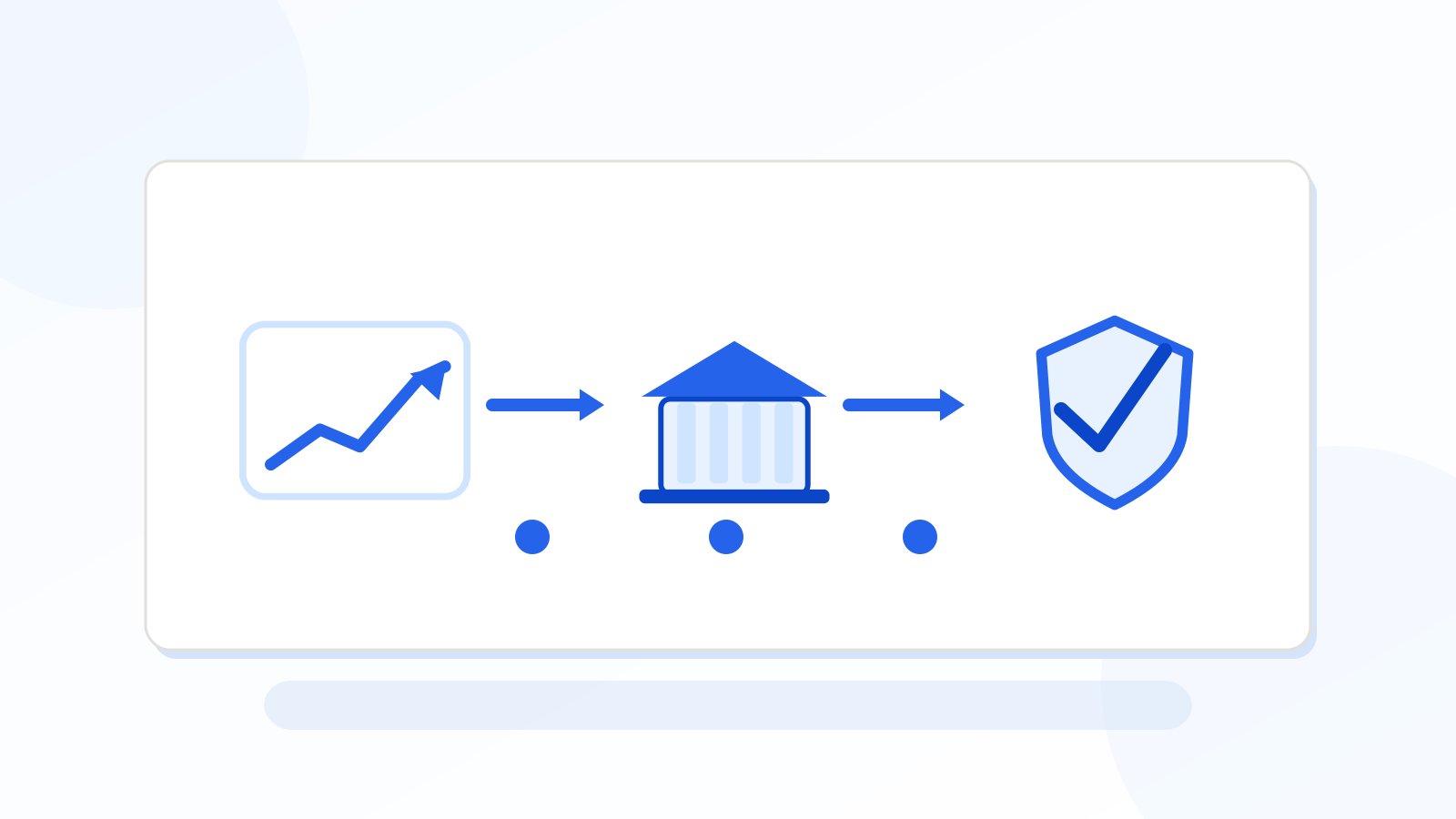
What happens when a financial trade is placed?
The trading lifecycle begins when an order is submitted and ends when the relevant cash and asset delivery obligations have been satisfied. Between those points, the order may be routed, matched, confirmed, cleared, collateralised and settled under rules that depend on the instrument and market. A broker displaying a completed purchase does not necessarily mean the legal settlement process is finished at that instant.
Stocks, government bonds, foreign exchange, futures and OTC derivatives use different systems. Some involve central counterparties, while others remain bilateral. Understanding the sequence helps separate market-price risk from operational and counterparty risks.
Orders, quotes and execution venues
An investor may send an order through a broker to a venue, dealer or other execution mechanism. The order specifies the instrument and quantity along with price or timing instructions. An exchange can match compatible orders under its rules, while a dealer market may provide a quote negotiated directly or through an electronic request-for-quote platform.
The venue determines trading hours, order validity, tick size, permitted order types and some transaction reporting. A securities trade cannot be analysed reliably without identifying the precise contract and venue, because similarly named products can have different multipliers or settlement terms.
Market orders explained
A market order seeks execution against available prices rather than guaranteeing a particular fill level. If a share’s best offer covers only 100 units but the order seeks 500, it may execute through multiple offer levels. The final average price can be materially higher than the price displayed when the order was submitted.
Market orders can be appropriate for some execution objectives but create price uncertainty, especially in volatile or thin markets. A platform may restrict them or apply specific auction rules at certain times. Never assume the last traded price is an executable quote for the intended quantity.
Limit orders explained
A limit buy order places a maximum acceptable purchase price; a limit sell sets a minimum sale price. A buy limit at £100 can execute at £100 or better under the venue’s rules, but it may not execute at all if sufficient counterparty interest never becomes available.
Even a brief trade at the limit level does not guarantee that every resting order at that price fills. Queue priority, order size and venue mechanics matter. Price control must be balanced against the possibility of missing the opportunity or receiving a partial fill.
Stop orders and execution gaps
A stop order uses a trigger condition to release or activate another order under the broker’s rules. A stop-market instruction does not guarantee that the trade fills at the trigger level. An overnight gap or fast sell-off can leave the best available execution much lower for a sell order.
A stop-limit instruction may constrain the minimum accepted sale price but remain unfilled if the market moves below that price. The distinction is critical for leveraged positions and instruments where exchange halts, circuit breakers or thin liquidity are possible.
Bid–ask spread and transaction cost
The cost of crossing the spread is often present even without an explicit brokerage commission. Suppose a fictional share has bid £99.80 and ask £100.20. A purchase at the offer followed by an immediate sale at the bid creates a £0.40-per-share gross spread loss, even if the midpoint and underlying valuation have not changed.
Actual execution can incur additional fees, taxes, funding and market impact. A “commission-free” trade is therefore not necessarily free. See Market Liquidity Explained.
Trade date versus settlement date
Trade date is the date on which the transaction is agreed under the market’s rules. Settlement date is when the associated cash and securities obligations are due to complete. They may differ by one or more business days, depending on product and jurisdiction. Market holidays and instrument-specific rules matter.
A purchase displayed on a brokerage screen may represent an executed trade pending settlement. Access to cash or the security can depend on the broker’s arrangements, the market’s settlement cycle and the legal ownership structure.
T+1 and T+2 settlement explained
T+1 means the standard intended settlement occurs one business day after trade date; T+2 means two business days. US markets moved most standard securities transactions to T+1 in May 2024. UK securities markets were generally using T+2 in November 2026, with the move to T+1 planned for 11 October 2027.
The FCA confirmed that scheduled UK transition date in its guidance updated in August 2026. Rules still differ across instruments and venues, and some exceptions apply. See FCA — About T+1 Settlement and US SEC Investor.gov — T+1.
Worked trade-date calendar example
Suppose a hypothetical US share trade takes place on a Tuesday that is a normal business day and there are no relevant holidays. Under T+1, standard settlement would be scheduled for Wednesday. Under a T+2 system, it would generally be scheduled for Thursday. If a settlement holiday intervenes, the calendar outcome changes.
The T notation describes standard settlement timing and does not imply that every platform will release withdrawal proceeds on an identical schedule. Operational processing, collateral rules and broker policies can affect available funds.
Clearing versus settlement
Clearing involves determining or managing trade obligations before final delivery. Depending on the product, it can include matching, netting, risk calculation and a central counterparty. Settlement completes the transfer of cash and securities or the contractual cash payment under the relevant system.
These are not synonyms. A transaction can be executed and cleared while still awaiting final settlement. Errors in securities identifiers, accounts or funding can disrupt the process, potentially creating additional costs and counterparty exposure.
Central counterparties and novation
In many centrally cleared markets, a central counterparty (CCP) becomes the counterparty to eligible cleared obligations under its rules. The CCP manages participant default exposure through financial resources, margin, membership standards and defined default-management procedures. Its precise legal mechanics vary by clearing arrangement.
Clearing can reduce reliance on the original trading counterparty but does not remove all market or systemic risk. It concentrates important infrastructure responsibilities, and members must supply collateral and maintain operational capability during stress.
Delivery versus payment
Delivery versus payment (DvP) aims to link securities delivery with the corresponding payment to reduce the risk of one party delivering without receiving the other side of the exchange. Settlement systems and custodians support the transfer process under relevant legal and operational rules.
The arrangement can reduce certain principal settlement risks but cannot guarantee that the underlying investment is fairly priced or that the asset will retain value afterward. Market-price, issuer and custody risks remain separate.
Initial margin explained
Initial margin is collateral required to establish or maintain specified derivatives or leveraged exposures, calculated under relevant broker, venue or clearing rules. Its purpose is to support performance of obligations, not to cap the maximum economic loss. A small initial deposit can control a much larger notional contract.
For example, a £50,000 notional exposure with £5,000 initial margin implies notional leverage of 10 times. A 10% adverse move could theoretically create a £5,000 mark-to-market loss before fees or other adjustments, exhausting the initial amount. Some structures can create larger losses than initial collateral.
Variation margin and margin calls
Variation margin reflects changing mark-to-market values under the contract and clearing arrangements. A loss-making derivatives position may have to provide additional cash or collateral even if the holder believes its long-term forecast will eventually prove correct. Failure to meet requirements can result in liquidation or other default procedures.
During market stress, rising volatility can also increase initial margin requirements, compounding the cash demand. Funding liquidity is therefore a key risk for leveraged trades, separate from the theoretical fair value of the underlying asset.
Futures: contract multipliers and daily settlement
Stock-index futures typically have a contract multiplier determining monetary exposure per index point. If a fictional futures contract has multiplier £10 per point and the underlying reference changes 100 points, one contract’s mark-to-market movement is approximately £1,000 under the specified price direction, before transaction costs.
Contract expiry, cash settlement or physical delivery rules, funding and dividend pricing also matter. A futures price is not necessarily identical to the cash index level. For specific contract mechanics see Stock Index Futures Explained.
Options: premiums and contingent obligations
An option grants specified rights to its holder and may impose obligations on the seller under its terms. A buyer usually pays a premium, while a writer can face margin and assignment or exercise risk. Options pricing depends on time, underlying price, volatility, dividends, rates and exercise structure.
A premium paid is not the same as the maximum loss of every option strategy. Selling uncovered options or combining derivatives with leverage can create significant or theoretically unbounded exposures in some cases. Contract specifications must be read rather than inferring economics from the word “option”.
OTC derivatives and bilateral risk
Over-the-counter derivatives can be negotiated between counterparties with bespoke maturities, payment structures or collateral arrangements. Some are centrally cleared, while others remain bilateral under applicable requirements. Credit support annexes, netting agreements, valuation and settlement rules determine important aspects of counterparty exposure.
Customisation can help businesses hedge real cash-flow exposures, but contractual complexity and liquidity can increase. A bespoke derivative’s theoretical model value may differ substantially from what it costs to terminate the position early.
Foreign exchange settlement
Spot, forward and swap FX transactions involve specified currencies, dates and amounts. Settlement can expose participants to the risk of delivering one currency without receiving the other, depending on the method and arrangements. Payment-versus-payment mechanisms can reduce some FX settlement risk for eligible transactions.
The BIS’s 2025 FX survey includes work on currency settlement and market structure. For an actual FX contract, review the settlement dates, counterparties and funding requirements rather than assuming every instrument simply swaps cash instantly.
Custody and beneficial ownership
After settlement, securities can be held through a custodian or nominee structure. The brokerage account may record the customer’s beneficial interest while the registered holder is an intermediary under applicable arrangements. Legal ownership, client asset protection and insolvency rights depend on the specific product and jurisdiction.
Custody is separate from investment performance. A financially sound custody arrangement cannot guarantee the market value of shares or bonds, while a winning market view cannot compensate for the inability to recover assets from a failed provider.
Corporate actions during settlement
Dividend entitlements, coupon accrual, record dates, ex-dividend dates and other events can affect how trades are handled. Exact entitlement rules depend on the security and settlement infrastructure. An investor cannot reliably determine who receives a cash dividend by looking only at the day of order entry.
Corporate actions may require adjustments to index levels, derivatives contracts or settlement obligations. A stock split changes the nominal number and price of shares without creating equivalent new economic value by itself.
Operational failures and failed trades
Errors in trade matching, missing securities, insufficient cash, system outages or incorrect instructions can prevent timely settlement. Market infrastructures have procedures to manage failures, but the parties may incur costs or additional exposures. Shorter settlement cycles can reduce certain risks while requiring greater automation and operational readiness.
Professional risk management includes accurate identifiers, pre-settlement matching, sufficient funding and monitoring of open obligations. Market volatility is not the only source of financial loss in a complex trading process.
Trade lifecycle research checklist
Before placing a trade, identify the security and contract, venue, currency, nominal or multiplier, applicable order type and actual bid–ask depth. Verify fees, tax considerations where relevant and margin obligations. Understand what exposure is owned versus merely referenced by a derivative.
After execution, record confirmed fills, trade and settlement dates, accrued interest or corporate action entitlements, cash obligations and custody arrangement. Stress-test market gaps, margin calls and settlement disruption. Trading discipline depends as much on mechanics as on directional analysis.
Trading lifecycle overview
| Trade lifecycle stage | What happens | Principal risk |
|---|---|---|
| Order entry | Instruction and parameters submitted | Wrong instrument or order type |
| Execution | Order matched or filled | Spread and slippage |
| Clearing | Obligations confirmed, netted or guaranteed | Counterparty and margin |
| Settlement | Cash and securities transferred | Funding and delivery failure |
| Custody | Ownership records and servicing maintained | Operational and legal asset protection |
Stages and responsibilities differ by market and instrument. Not every trade uses a CCP.
Netting and why gross notional differs from settlement cash
Clearing arrangements may net eligible obligations so participants do not always need to deliver the gross sum of every separate matched trade. This can reduce operational demands and some counterparty exposure under the applicable rules. But netting does not eliminate the underlying market risk or guarantee that a participant will have sufficient collateral during a sudden price move.
For example, a firm buying 1,000 units and selling 900 eligible units of the same security through a compatible clearing process may have a different resulting delivery obligation from the sum of the two gross trades. The precise netting outcome depends on account structure, contract identity and clearing rules.
Why shortened settlement cycles require preparation
Moving from T+2 to T+1 reduces the ordinary time between execution and settlement, potentially lowering some unsettled counterparty exposures. It also gives firms less time to correct trade details, move collateral or arrange financing. Automated matching, accurate client information and timely funding therefore become more important.
The UK’s planned 11 October 2027 transition follows industry and regulator work on these operational requirements. Traders should check the actual market calendar and broker instructions rather than assume all instruments will change simultaneously or that every international transaction has identical timing.
Frequently asked questions
Is my share purchase fully settled as soon as I click Buy?
Not necessarily. The execution may occur first, while final securities and cash settlement follows the market’s applicable cycle.
What is T+1 settlement?
It generally means scheduled settlement one business day after trade date, subject to product and calendar conventions.
When is the UK moving to T+1?
The FCA’s guidance identifies 11 October 2027 as the planned UK transition for relevant securities.
Does initial margin cap my maximum loss?
No. It is a collateral requirement, not a guarantee that losses cannot exceed the amount initially posted.
Do stop orders guarantee a loss limit?
No. Gaps, liquidity conditions and order rules can cause a different fill or no fill.
Related Financial Markets Education
Explore primary and secondary markets, execution liquidity, and financial intermediaries and clearing roles.
Sources and further reading
- FCA — About T+1 Settlement, Updated 2026
- US SEC Investor.gov — T+1 Settlement
- HM Treasury — Accelerated Settlement Programme
Important notice: General financial education, not personal trading advice. Settlement dates, collateral requirements and protections vary by product and venue. Derivatives and leveraged trades can create rapid, large losses, potentially exceeding initial collateral.