
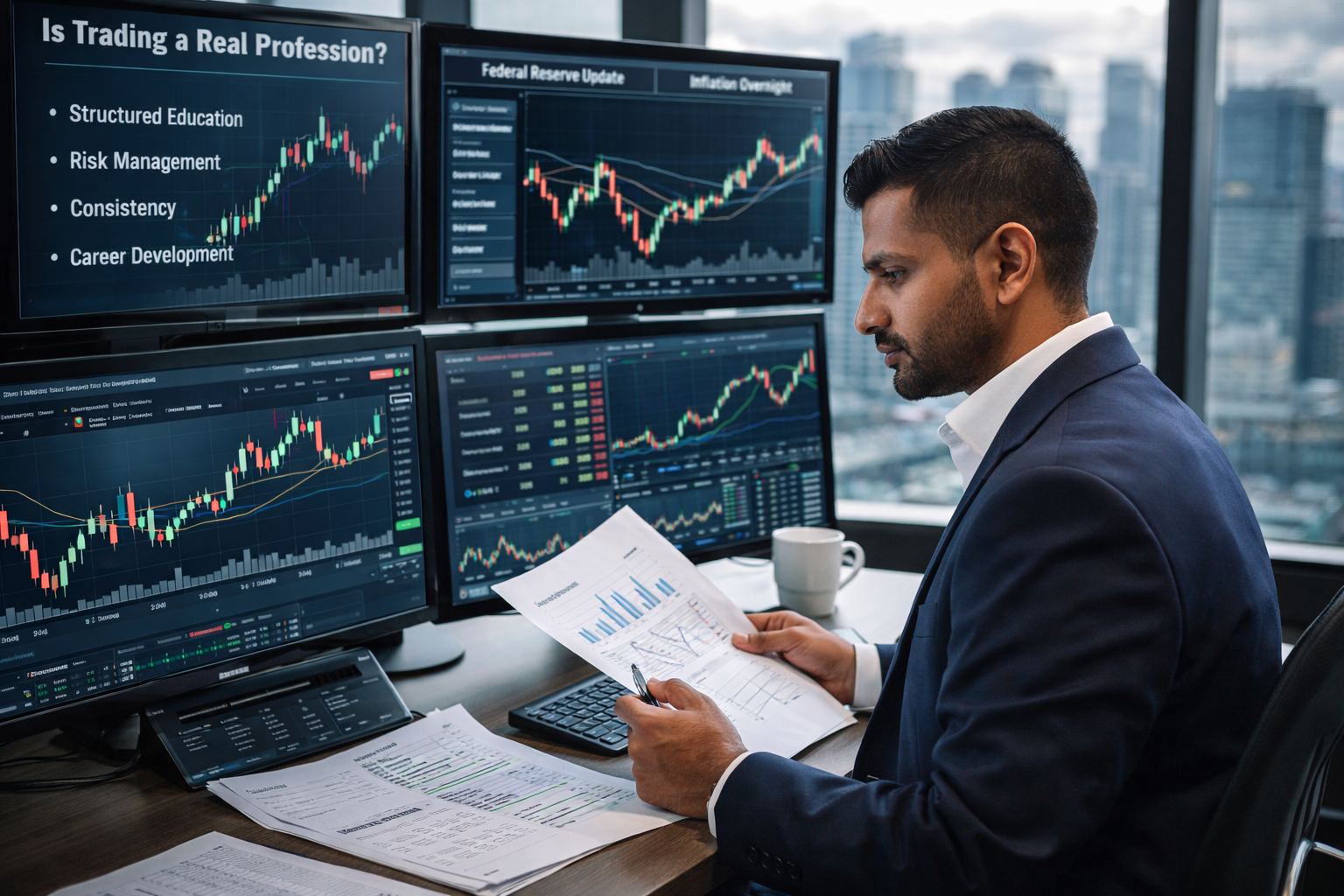
Is Trading a Real Profession? Education, Structure, and Reality
Introduction
Is trading a real profession is a question asked by people who want to treat trading as a genuine career rather than a speculative side activity. This article explains what turns trading into a profession, the education and structure professional traders follow, and the realities of risk, consistency, and career development. It is written for career-switchers, aspiring professional traders, and experienced traders who want clarity on what professional trading actually involves.
Trading is a real profession when it is built on structured education, disciplined processes, and institutional-style risk management instead of shortcuts, signals, or unstructured speculation.
What Makes Trading a Profession Rather Than a Hobby
A profession relies on skill, structure, and accountability. Trading becomes professional when it follows the same principles.
Professional trading requires formal education, repeatable analytical processes, and defined risk rules. Instead of chasing results, professional traders focus on consistency over long time horizons. As a result, performance is measured by discipline and capital preservation, not isolated profits.
Most importantly, professional trading treats decision-making as a skill that develops through structured learning and deliberate practice.
Professional Trading vs Retail Trading
Retail trading often focuses on quick returns, isolated strategies, or indicator-based systems. In contrast, professional trading focuses on probability, process, and risk control.
Professional traders analyse macroeconomic conditions, market structure, and sentiment before they execute trades. Because of this, they adapt as conditions change rather than forcing the same approach in every market.
This difference explains why retail traders often struggle while professionally trained traders prioritise survival and long-term consistency.
The Education Required for a Professional Trading Career
Professional trading does not rely on trial and error alone. Instead, it requires structured education that explains how markets work and how decisions should be made under uncertainty.
Professional trading education covers macroeconomic analysis, technical structure, risk management, execution, and trading psychology. Each component supports the others. Without this integration, gaps appear in judgement and execution.
Institutions such as the Federal Reserve, European Central Bank, IMF, and BIS shape global markets through policy and economic forces. Professional traders learn to interpret these drivers and apply them within structured market frameworks.
Core Skills Every Professional Trader Develops
Market Analysis and Context
Professional traders always analyse markets in context. They assess economic conditions, policy direction, and risk sentiment before they plan execution. This approach prevents decisions made in isolation from broader forces.
Risk Management and Capital Control
Risk management defines professionalism. Professional traders control position size, drawdowns, and exposure at all times. As a result, they focus on staying in the game rather than maximising short-term gains.
Execution Discipline
Professional traders follow predefined execution rules. They plan trades in advance, manage entries and exits systematically, and avoid impulsive decisions driven by emotion.
Psychological Consistency
Emotional discipline separates professionals from amateurs. Professional traders manage stress, bias, and decision fatigue through structured routines, rules, and review processes.
Can Trading Realistically Become a Career
Trading can become a professional career, but only under realistic conditions. Professional traders treat trading as long-term skill development rather than a fast income opportunity.
Income consistency develops slowly and depends on risk control, capital size, and market conditions. Therefore, many professional traders maintain alternative income streams during early development stages.
Those who combine education, patience, and discipline significantly improve their long-term probability of success.
The Role of Mentoring in Professional Trading
Mentoring accelerates professional development. Feedback helps traders correct mistakes early, refine interpretation, and maintain discipline.
In institutional environments, junior traders learn through supervised application. Programmes that combine structured education with mentoring replicate this model and reduce costly learning errors.
Who Professional Trading Is Suited For
Professional trading suits individuals who value structure, learning, and discipline. This includes career-switchers, analytical professionals, and traders who want a clear trading career path based on process.
However, trading does not suit people seeking guaranteed income, excitement, or shortcuts. Professional trading prioritises risk control and long-term consistency above all else.
Common Misconceptions About Trading as a Profession
One common misconception is that professional traders rely on predictions. In reality, they manage probability and risk.
Another misconception is that technology replaces skill. While tools support analysis, professional trading still depends on judgement, discipline, and structured thinking.
Finally, many assume trading success arrives quickly. In practice, professional competence develops over years, not weeks.
Example of a Professional Trading Career in Practice
When a professional trader analyses equity indices, they first assess macro conditions, central bank policy, and risk sentiment. Next, they evaluate market structure and liquidity.
Only then do they plan execution using technical frameworks. Finally, they size risk based on volatility, portfolio exposure, and capital rules rather than conviction alone.
Professional trading education teaches this process step by step.
Is Trading a Real Profession in 2026
Trading is a real profession in 2026 for individuals who follow structured education, disciplined processes, and realistic expectations. Professional trading focuses on consistency, adaptability, and capital preservation rather than short-term profit.
Education-led programmes that integrate analysis, risk management, psychology, and mentoring provide the strongest foundation for a sustainable professional trading career.
Frequently Asked Questions
Is trading a real profession
Trading is a real profession when traders apply structured education, disciplined risk management, and consistent analytical processes. Professional traders focus on long-term performance, adaptability, and capital preservation rather than short-term speculation or prediction.
How long does it take to become a professional trader
Becoming a professional trader usually takes several years of structured learning and disciplined practice. Progress depends on education quality, risk control, market conditions, and the ability to apply consistent processes over full market cycles.
Do professional traders rely on indicators
Professional traders do not rely solely on indicators. Instead, they use indicators as supporting tools alongside macroeconomic context, market structure, and formal risk management to guide decisions rather than predict outcomes.
Can beginners become professional traders
Beginners can become professional traders if they commit to structured education and disciplined development from the start. Learning correctly early helps build strong habits and avoids mistakes that often limit long-term progress.
Is mentoring necessary to trade professionally
Mentoring is not mandatory, but it significantly accelerates development. Structured feedback and accountability help traders refine decision-making, maintain discipline, and avoid repeated errors, especially during early career stages.