
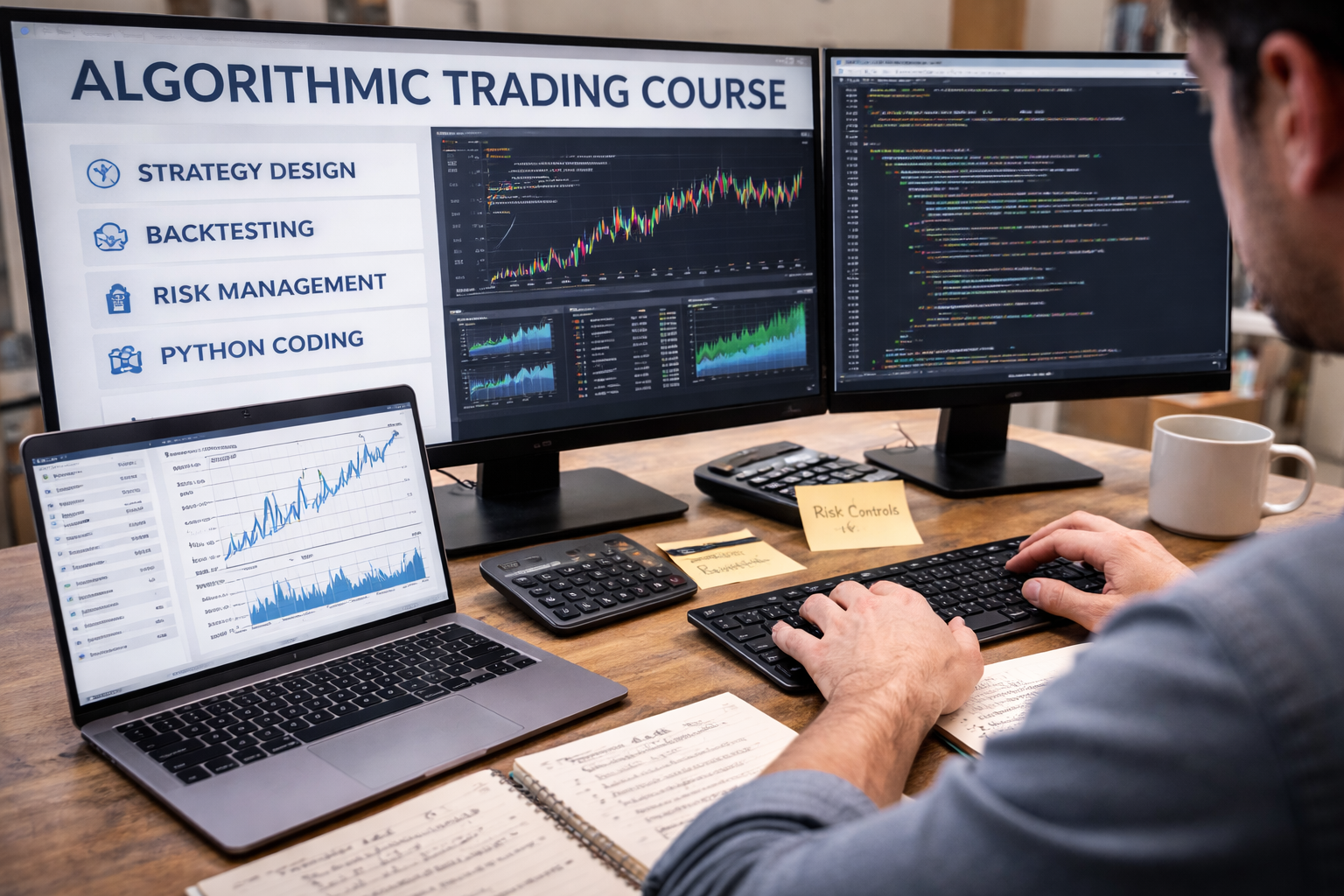
Algorithmic Trading Courses: What You Learn vs What You Expect
Algorithmic trading courses appeal to learners who want to automate decisions, reduce emotion, and use data-driven logic in markets. Many expect these courses to teach ready-made systems that run profitably on their own. In reality, algorithmic trading courses focus on process design, data interpretation, and risk control, not on turnkey money-making algorithms.
An algorithmic trading course is an educational programme that teaches how trading rules are designed, tested, implemented, and monitored using data and code, rather than discretionary decision-making.
What Algorithmic Trading Courses Are Designed to Teach
The primary aim of algorithmic trading courses is to develop systematic thinking. They teach how to translate trading ideas into repeatable rules that can be tested objectively.
Well-structured courses emphasise:
- Rule-based decision design
- Data quality and limitations
- Testing logic rather than outcomes
- Ongoing monitoring and adaptation
The goal is robustness, not perfection.
Core Topics Covered in Algorithmic Trading Courses
Most credible algorithmic trading courses share a common foundation.
Trading Logic and System Design
Learners are taught how to define entry, exit, and risk rules clearly enough to be executed by code without discretion.
Backtesting and Data Analysis
Courses explain how historical testing works, including:
- Sample size and bias
- Overfitting risks
- Why good backtests still fail live
This is one of the most misunderstood areas.
Programming and Tools
Depending on the course, learners may be introduced to:
- Python or similar languages
- Data libraries and APIs
- Strategy platforms and frameworks
The emphasis is usually on logic, not advanced software engineering.
Risk Management in Automated Systems
Good courses integrate:
- Position sizing rules
- Drawdown limits
- System shutdown conditions
Automation increases speed, not safety.
What Learners Often Expect Instead
Many learners start algorithmic trading courses expecting:
- Fully automated profitable systems
- Minimal ongoing involvement
- Guaranteed edge through technology
- Quick deployment with little testing
These expectations rarely match reality.
What Algorithmic Trading Courses Do Well
When taught properly, algorithmic trading courses are effective at:
- Removing emotional decision-making
- Enforcing discipline through rules
- Highlighting data limitations
- Encouraging evidence-based thinking
They improve process quality, not certainty.
What Algorithmic Trading Courses Cannot Do
No algorithmic trading course can:
- Eliminate market regime changes
- Prevent strategy decay
- Guarantee long-term profitability
- Replace continuous oversight
Markets evolve faster than static code.
Algorithmic Trading Courses vs Discretionary Trading Courses
Algorithmic trading courses focus on rule definition and testing, while discretionary courses focus on judgment and interpretation.
- Algorithms require clarity and consistency
- Discretion requires experience and adaptability
- Mixing the two without structure often leads to failure
Understanding the difference is essential.
Who Algorithmic Trading Courses Are Best Suited For
These courses suit learners who:
- Enjoy structured, logical thinking
- Are comfortable working with data
- Accept long development cycles
- Prefer systematic processes
They are less suitable for those seeking simplicity or fast results.
How to Evaluate an Algorithmic Trading Course Properly
Before enrolling, consider:
- Does the course address overfitting honestly?
- Is risk management embedded throughout?
- Are limitations discussed clearly?
Courses that avoid these topics should raise concern.
Are Algorithmic Trading Courses Worth Taking?
For many traders, yes — when expectations are realistic. Algorithmic trading courses can significantly improve discipline and analytical rigour, but success still depends on testing, monitoring, and risk control.
Frequently Asked Questions
What do algorithmic trading courses actually teach?
They teach how to design, test, and manage rule-based trading systems using data and code, not how to deploy guaranteed profitable algorithms.
Do algorithmic trading courses guarantee profits?
No. Algorithms are subject to market change, execution risk, and data limitations. Profitability depends on ongoing management and risk control.
Are algorithmic trading courses suitable for beginners?
They can be, but beginners benefit most when they already understand basic market concepts and risk management.
Do I need to be a programmer to learn algorithmic trading?
Basic coding helps, but many courses focus more on logic and structure than advanced programming skills.
Is algorithmic trading safer than manual trading?
Not necessarily. Automation removes emotion but can amplify losses if systems are poorly designed or unmanaged.