
Trading Classes vs Online Trading Courses vs Self-Study: Which Is Best?
People who want to learn trading often face an early decision: should they attend trading classes, enrol in online trading courses, or learn through self-study? Each option offers different levels of structure, flexibility, and feedback. This article compares trading classes vs online trading courses vs self-study so you can decide which learning format works best for your goals, schedule, and learning style.
Trading classes, online trading courses, and self-study are three learning formats that differ in structure, accountability, flexibility, and feedback, but none replaces disciplined practice and skill development.
What Trading Classes Actually Offer
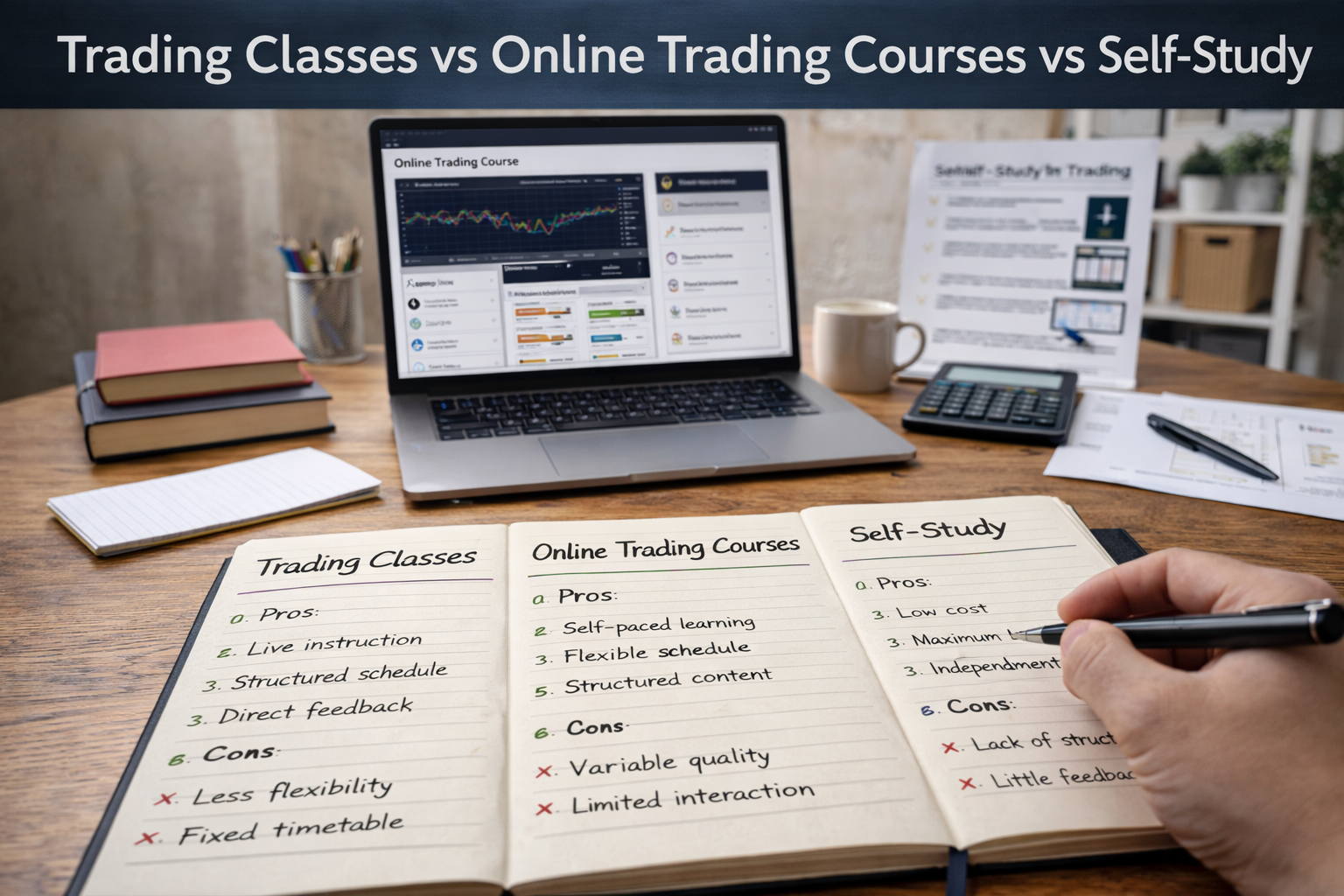
Trading classes are typically instructor-led and delivered either in person or live online. Their main advantage is structure. Learners follow a set schedule, receive explanations in real time, and often benefit from accountability.
However, trading classes usually offer limited flexibility. Fixed timetables and group pacing may not suit learners who prefer self-directed progress.
How Online Trading Courses Work
Online trading courses are usually self-paced programmes made up of recorded lessons and structured modules. They offer flexibility, allowing learners to study around work or personal commitments.
High-quality online trading courses provide logical progression and context. Poorly designed ones overwhelm learners with disconnected material, making learning less effective despite the volume of content.
What Self-Study Means in Trading
Self-study involves learning trading independently using books, articles, videos, and other free resources. It offers maximum flexibility and minimal cost, which makes it appealing to beginners.
The downside is lack of structure. Without a clear framework, many learners consume large amounts of content without building consistent decision-making skill.
Trading Classes vs Online Courses vs Self-Study: Key Differences
Each learning format has clear strengths and limitations:
- Trading classes provide structure and accountability but less flexibility
- Online trading courses balance structure with flexibility
- Self-study trading offers freedom but little guidance or feedback
Understanding these differences helps align expectations with the chosen approach.
Which Option Is Best for Beginners?
Beginners usually benefit from some level of structure. Trading classes or well-designed online trading courses help reduce confusion by presenting concepts in a logical sequence.
Self-study can work at the very beginning, but many learners struggle to progress once basic concepts are understood.
The Role of Practice in Every Learning Format
Regardless of format, practice is essential. Learning trading does not come from watching or reading alone. Skill develops when learners apply concepts, review decisions, and refine behaviour.
No learning format removes the need for repetition and disciplined practice.
Common Mistakes When Choosing How to Learn Trading
Learners often make predictable mistakes:
- Choosing based on price alone
- Expecting one format to guarantee results
- Avoiding structure entirely
- Overvaluing content quantity over learning quality
Avoiding these mistakes improves long-term outcomes more than choosing any specific format.
How to Choose the Right Trading Learning Format
When deciding between trading classes, online trading courses, and self-study, consider:
- Your available time and schedule
- Your need for structure and accountability
- Your preferred learning pace
- Your willingness to practise and review independently
The best learning format is the one you can follow consistently.
Which Learning Format Should You Choose?
There is no universally “best” option. Many learners combine formats over time, using online trading courses for structure and self-study for reinforcement. Trading classes may suit those who need accountability early on.
Choosing a format that matches your habits and expectations matters more than the format itself.
Why No Learning Format Is a Shortcut
Trading skill develops gradually through repetition, feedback, and reflection. Learning formats support this process but do not replace effort or remove uncertainty.
Viewing learning as a long-term process helps maintain realistic expectations and sustainable progress.
Frequently Asked Questions
Are trading classes better than online trading courses?
Trading classes offer live interaction and structure, while online trading courses provide flexibility and self-paced learning. The better option depends on learning style, schedule, and need for accountability.
Can you learn trading through self-study alone?
Self-study can help with learning basics, but many learners struggle without structure and feedback. Combining self-study with a framework often leads to better results.
Do online trading courses replace practice?
No. Online trading courses provide information and structure, but practice and review are essential for building trading skill and consistency.
What is the cheapest way to learn trading?
Self-study using free resources is usually the lowest-cost option. Effectiveness depends on structure, consistency, and review rather than price.
How should beginners choose how to learn trading?
Beginners should choose a learning format that fits their schedule, learning style, and ability to practise consistently. Structure and realistic expectations matter more than format alone.