
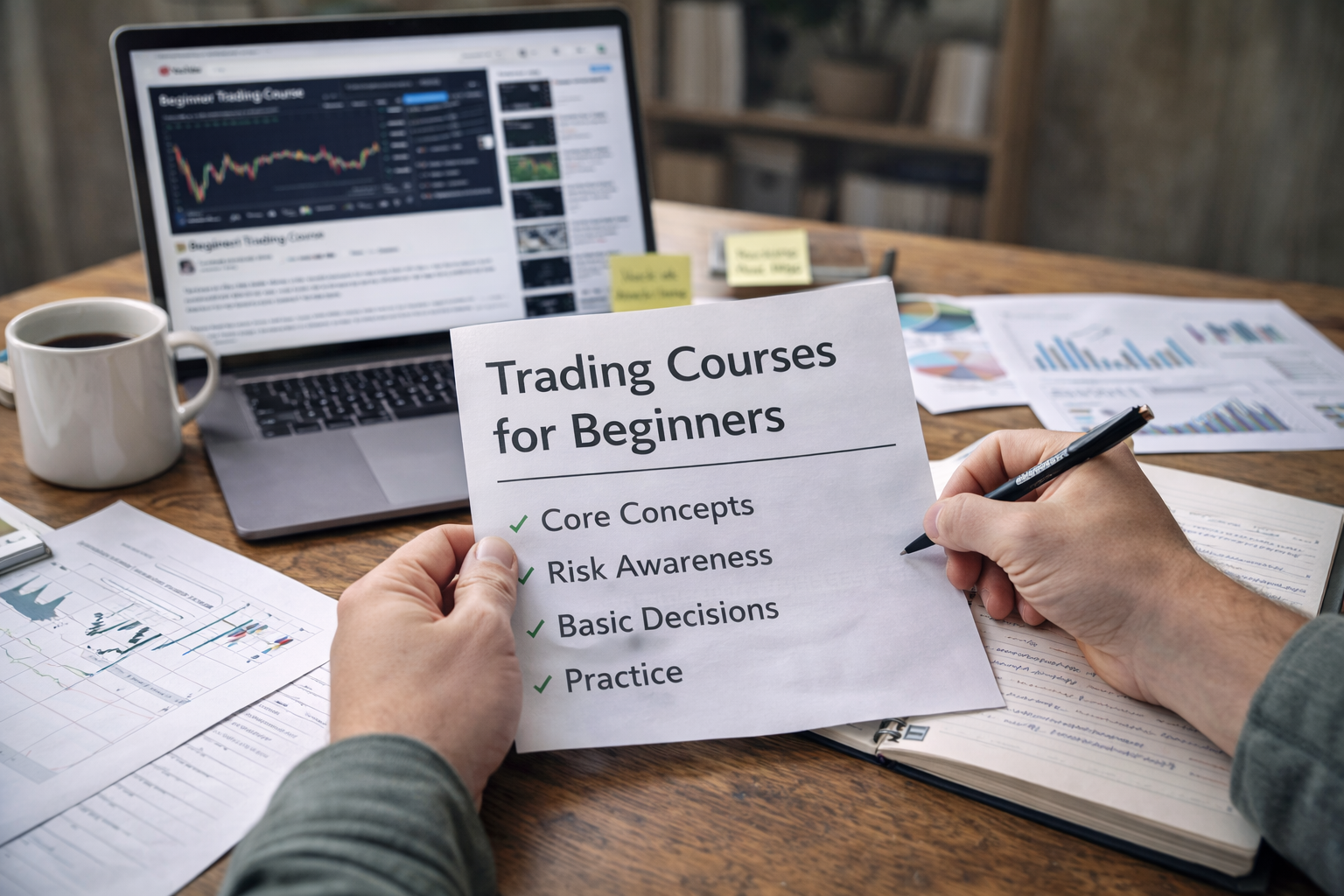
Trading Courses for Beginners: What You Should Learn First
Trading courses for beginners are designed to help new learners understand how trading works without overwhelming them. Many beginners struggle not because trading is complex, but because they start with the wrong topics in the wrong order. This article explains what beginners should learn first, how beginner trading courses are structured, and how to build a solid foundation before moving on to advanced material.
Trading courses for beginners are structured learning programmes that focus on core market concepts, basic decision-making, and risk awareness before introducing strategies or advanced techniques.
Why Beginner Trading Courses Need a Different Approach
Beginners face a steep learning curve. Without structure, they often jump straight into strategies, indicators, or short-term trading ideas without understanding how markets actually function.
Beginner trading courses exist to slow this process down. Their purpose is to establish understanding, not speed.
The Core Concepts Beginners Should Learn First
Effective beginner trading courses prioritise fundamentals over tactics.
The first areas beginners should focus on include:
- How financial markets operate
- What trading actually involves in practice
- The difference between speculation and decision-making
- Basic market terminology
Without these foundations, later learning becomes fragmented.
Understanding Risk Before Learning Strategies
One of the most important topics in beginner trading education is risk. Many beginners focus on potential profits before understanding losses.
Good trading courses for beginners introduce:
- Risk per trade
- Why losses are unavoidable
- The role of position sizing
- Capital preservation principles
Learning risk early helps prevent emotional decision-making later.
Basic Technical and Fundamental Awareness
Beginner trading courses usually introduce technical and fundamental concepts at a high level.
This includes:
- What price charts represent
- How trends and ranges form
- Why economic information affects markets
- How to interpret information without prediction
At this stage, the goal is familiarity, not mastery.
Why Strategies Come Later
Many beginners want a strategy immediately. However, strategies rely on context, discipline, and execution skills that beginners have not yet developed.
Beginner trading courses that delay strategy teaching tend to produce better long-term outcomes because learners first understand why decisions are made.
Practice and Review at the Beginner Level
Practice is essential even at the beginner stage. This does not mean trading large size or chasing results.
Effective beginner practice focuses on:
- Applying simple rules
- Observing outcomes
- Reviewing decisions rather than profits
- Building consistency
Courses that emphasise review help beginners develop better habits early.
Common Mistakes Beginner Traders Make
Beginner trading courses often exist to prevent predictable errors, such as:
- Overtrading
- Ignoring risk limits
- Copying strategies without understanding
- Confusing information with skill
Avoiding these mistakes early can save significant time and capital.
How to Choose the Right Trading Course as a Beginner
When selecting a beginner trading course, look for:
- Clear progression from basics to application
- Emphasis on risk management
- Simple explanations without jargon
- Encouragement of practice and reflection
Courses that promise speed or certainty are rarely suitable for beginners.
How Long Beginners Should Expect to Learn
Beginner trading education is not a short phase. Understanding concepts may happen quickly, but consistent application takes time.
Beginner trading courses should be viewed as the starting point of a longer learning process rather than a complete solution.
Frequently Asked Questions
Are trading courses for beginners worth it?
Trading courses for beginners can be valuable when they provide structure and focus on core concepts. They work best when combined with practice and realistic expectations rather than promises of quick results.
What should a beginner learn before trading real money?
Beginners should understand how markets work, basic risk management, and how to review decisions before trading real capital. Strategies should come later.
Do beginner trading courses teach strategies?
Some do, but the best beginner courses focus first on understanding, risk, and discipline. Strategies are more effective once foundational skills are in place.
How long does it take to complete a beginner trading course?
Completion times vary, but learning does not end when a course finishes. Most beginners need ongoing practice after completing a course.
Can beginners learn trading without a course?
Yes, but many beginners struggle without structure. A beginner trading course helps organise learning but cannot replace practice and experience.