Free Forex Mentoring: What You Can (and Cannot) Learn for Free
A clear guide to free forex mentoring. Learn what you can gain from free resources, what free mentoring usually misses, and when structured mentoring becomes important.


A clear guide to free forex mentoring. Learn what you can gain from free resources, what free mentoring usually misses, and when structured mentoring becomes important.

Mentoring accelerates trading skill development by providing structured feedback, accountability, and professional guidance that self-directed learning cannot offer. This article explains why traders who work with mentors typically progress faster and achieve greater consistency.
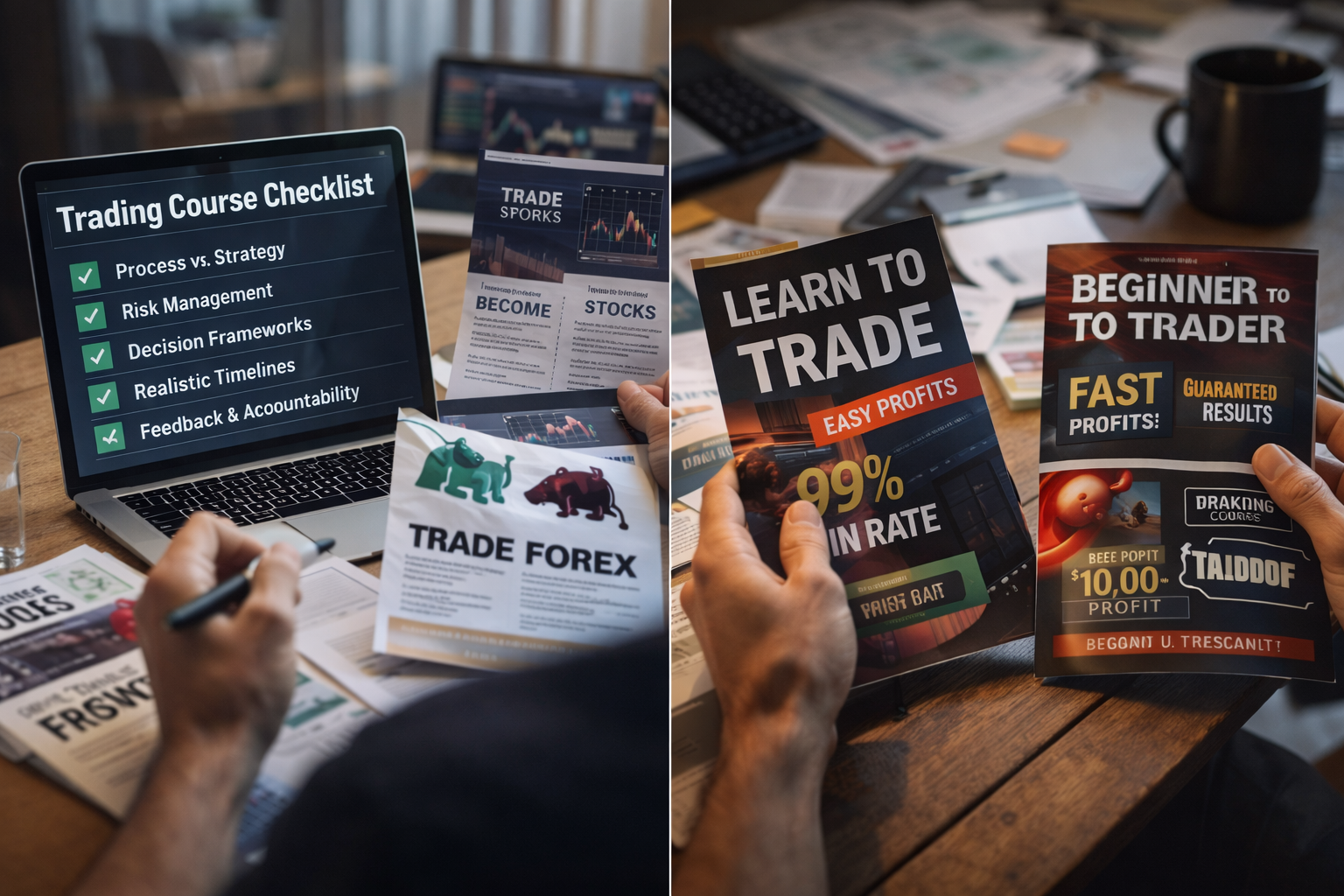
Not all trading courses are worth paying for. This article shows how to evaluate a trading course properly, identify red flags, and decide whether the education offered will build real trading skill or simply sell promises.

A neutral guide to evaluating forex mentoring. Understand professional vs retail coaching, mentoring vs courses and signals, and the criteria that define structured, education-first programmes.
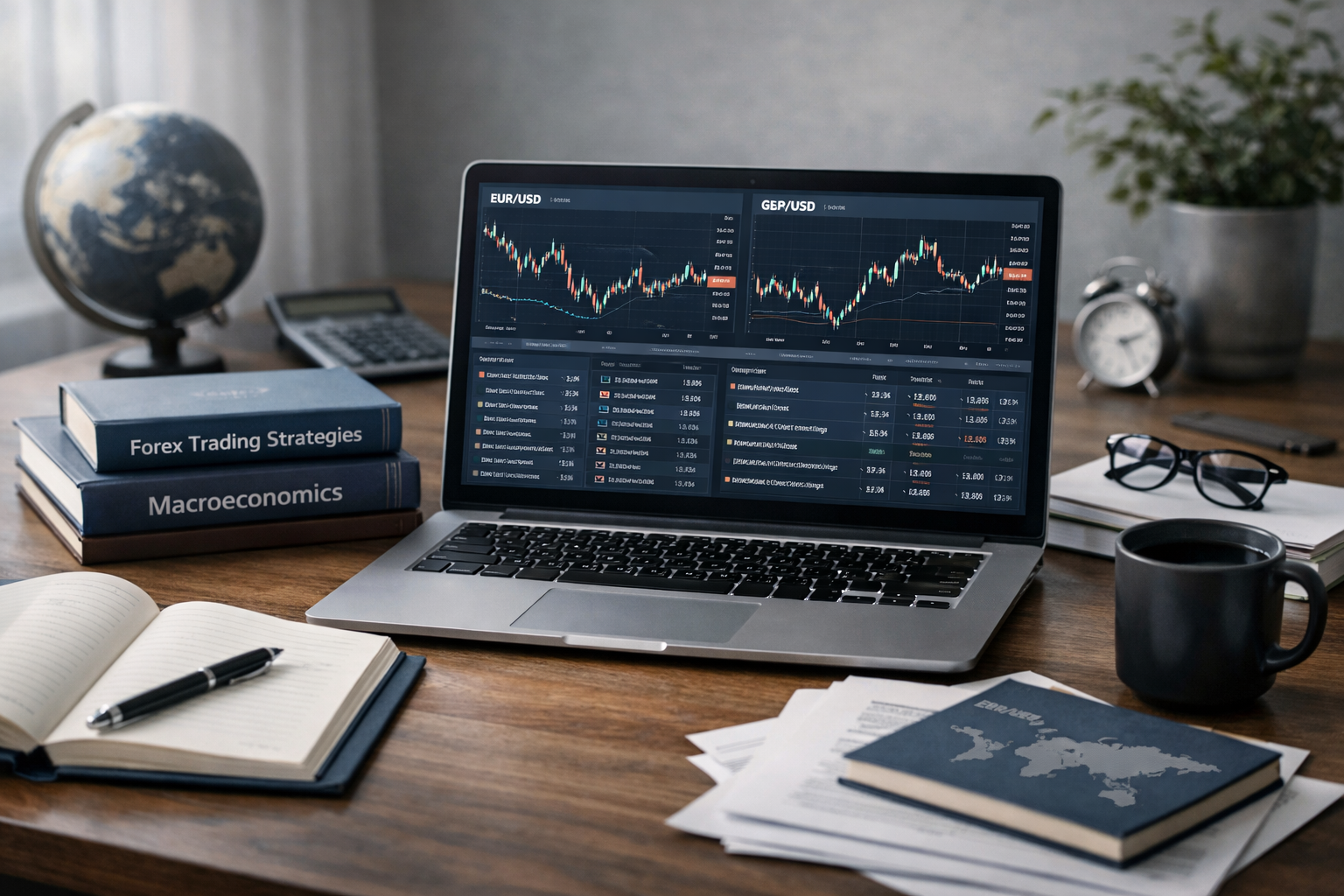
This guide explains how to choose the best forex course by comparing professional versus retail training. Learn what matters most, including course structure, risk management, assessment, and recognised certification.
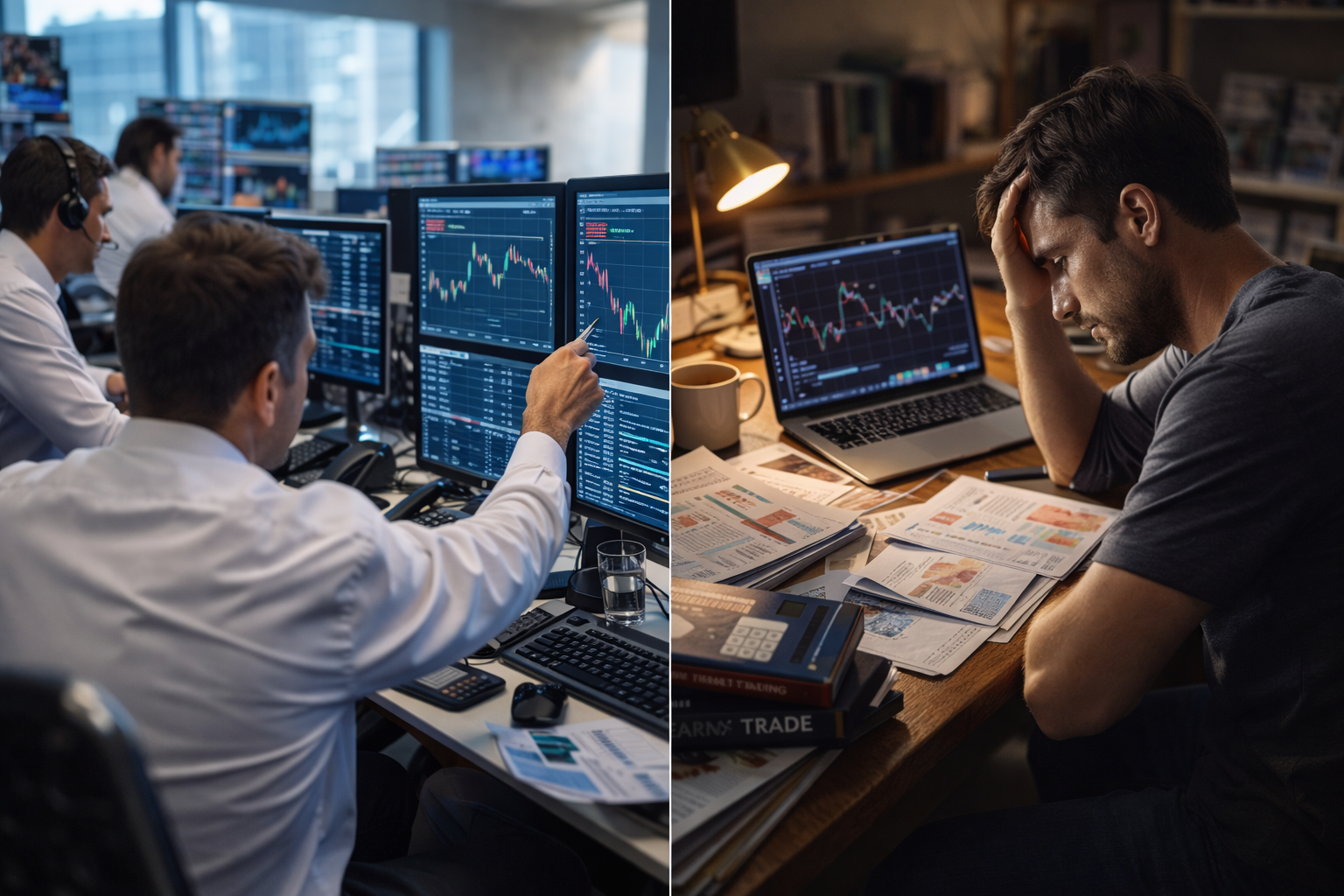
Professional traders are taught structured process, risk discipline, and decision-making frameworks that retail traders rarely learn. This article explains the key educational differences-and why they matter for long-term trading consistency.
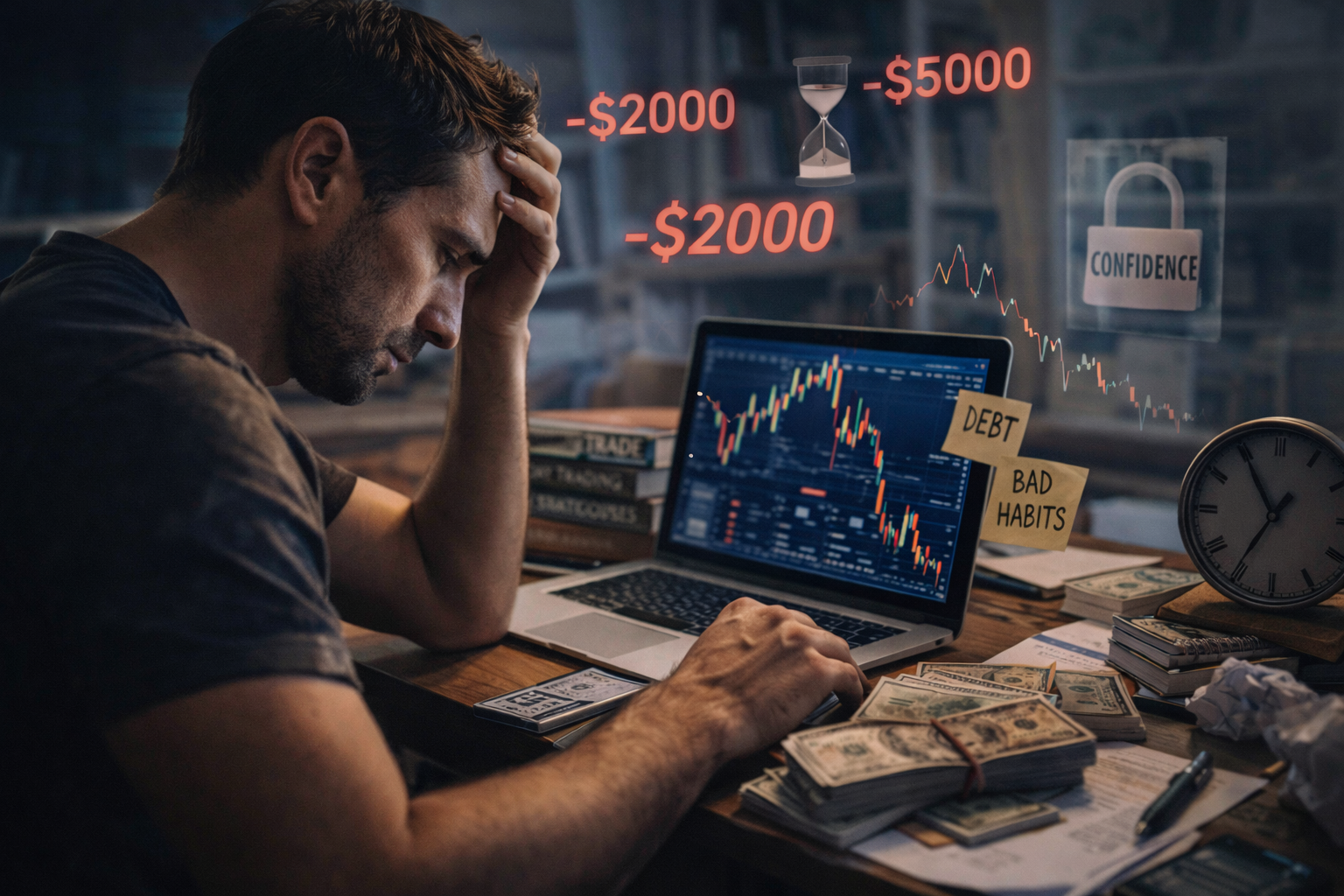
Learning to trade the wrong way costs far more than losing trades. This article explains how poor trading education damages capital, confidence, and time-and why choosing the right learning path early is critical for long-term consistency.
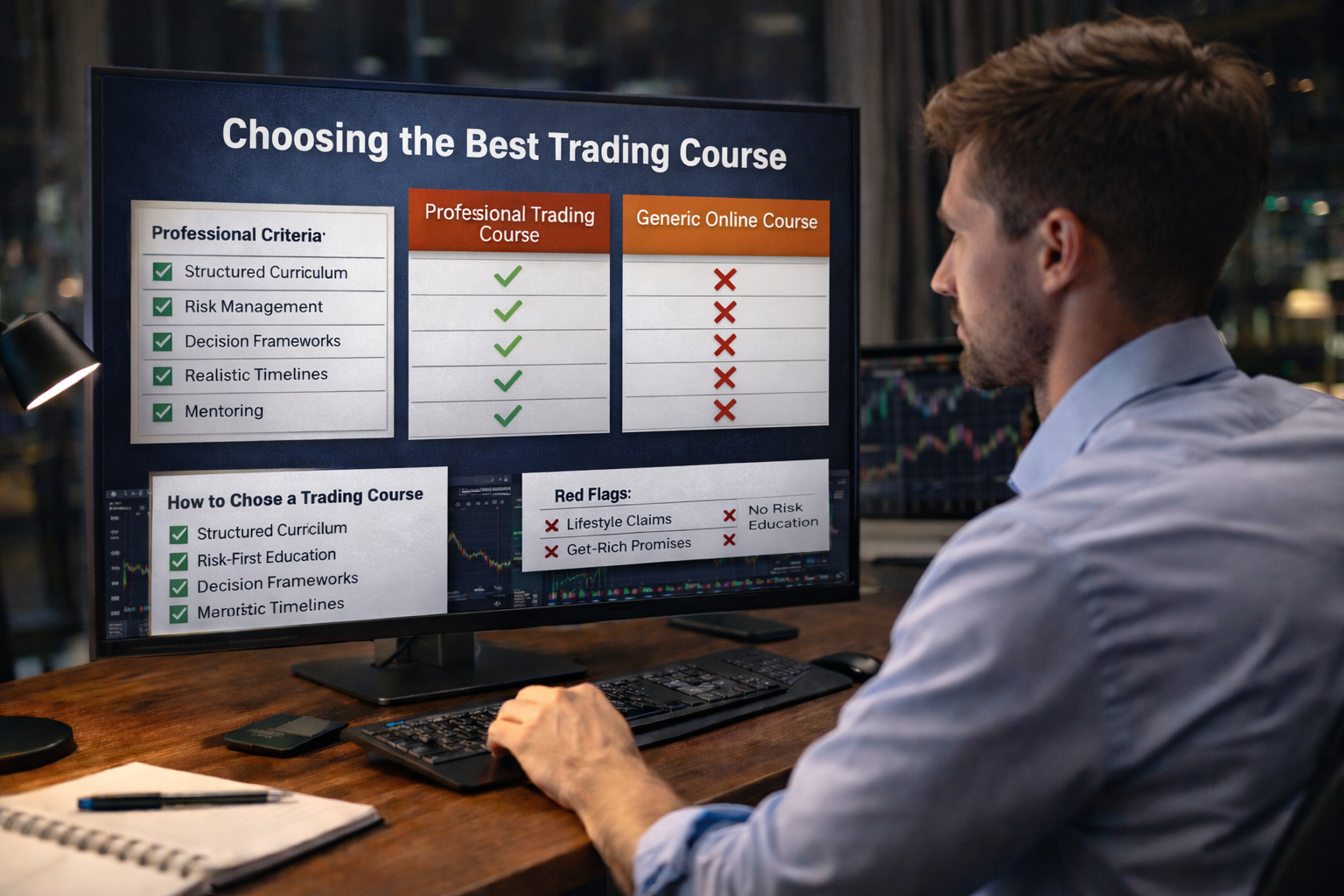
Choosing the best trading course requires more than reviews or promises. This guide explains how serious traders evaluate trading education, what professional standards matter most, and how to select a course that supports long-term consistency and career-level development.
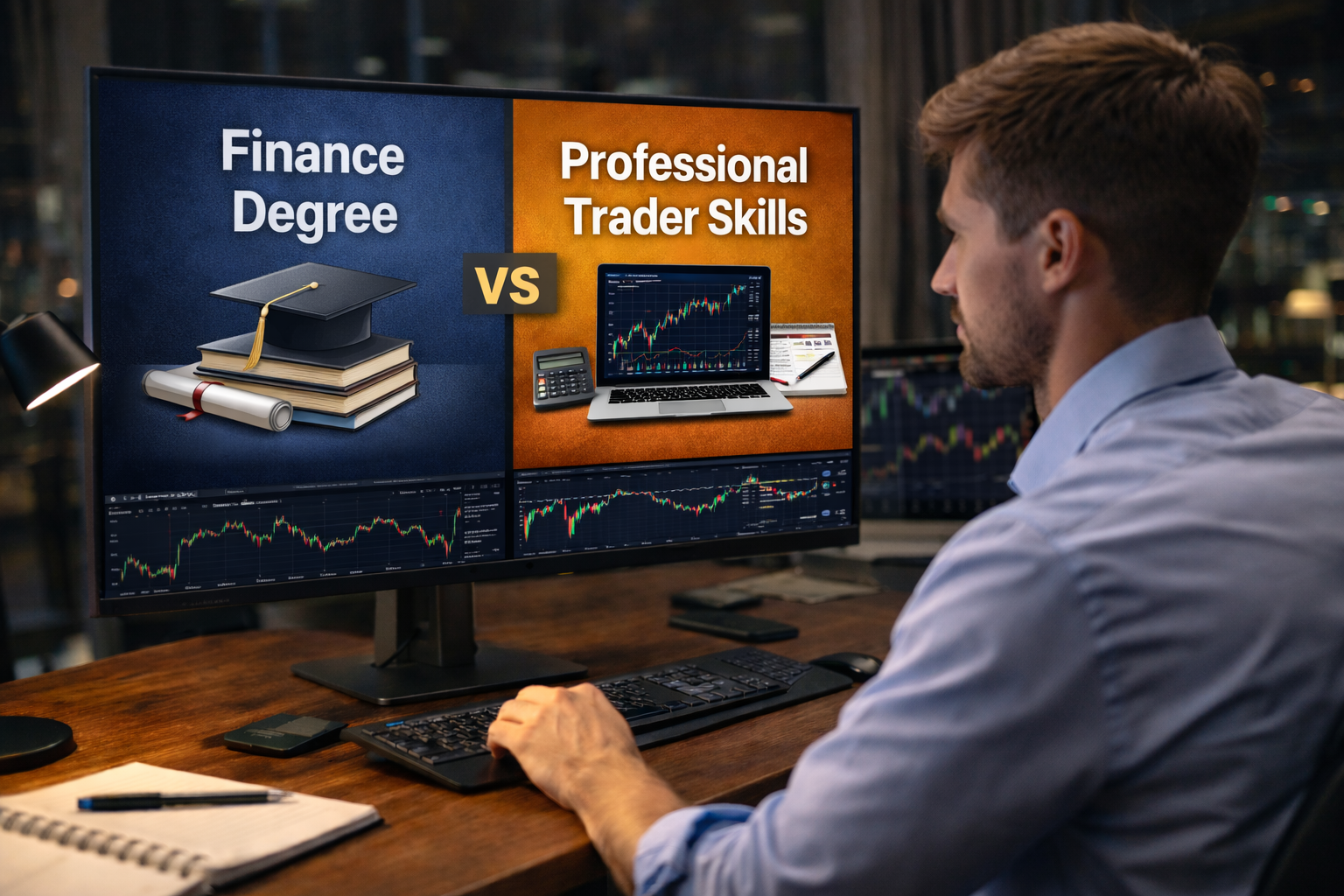
A finance degree is not required to become a professional trader. This guide explains what skills matter more than academic qualifications, how traders succeed without degrees, and the most effective education paths for building a professional trading career.
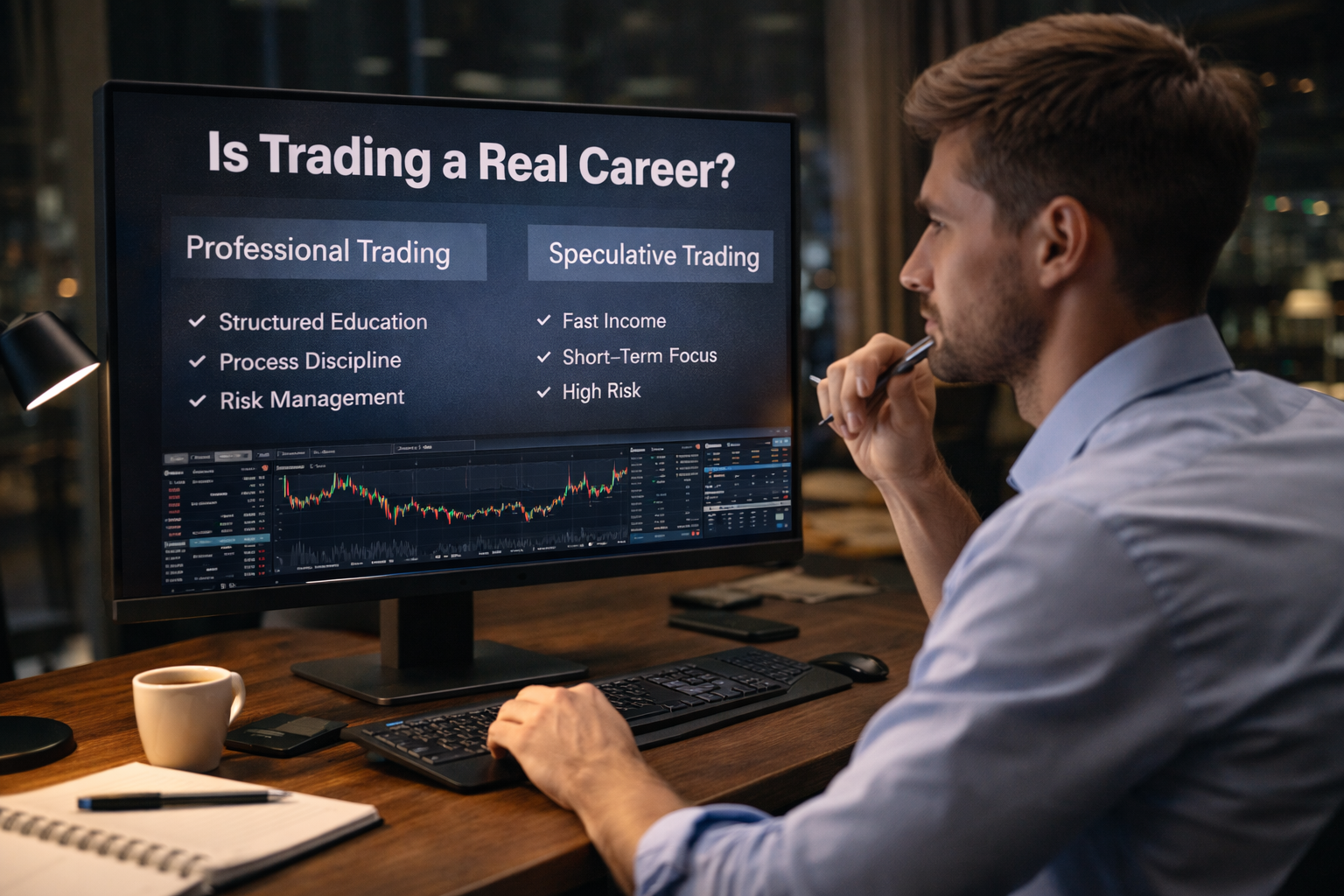
Trading can be a real career when it is approached professionally rather than speculatively. This guide explains what makes trading a viable long-term career, the skills and education required, and how professionals build sustainable trading careers over time.
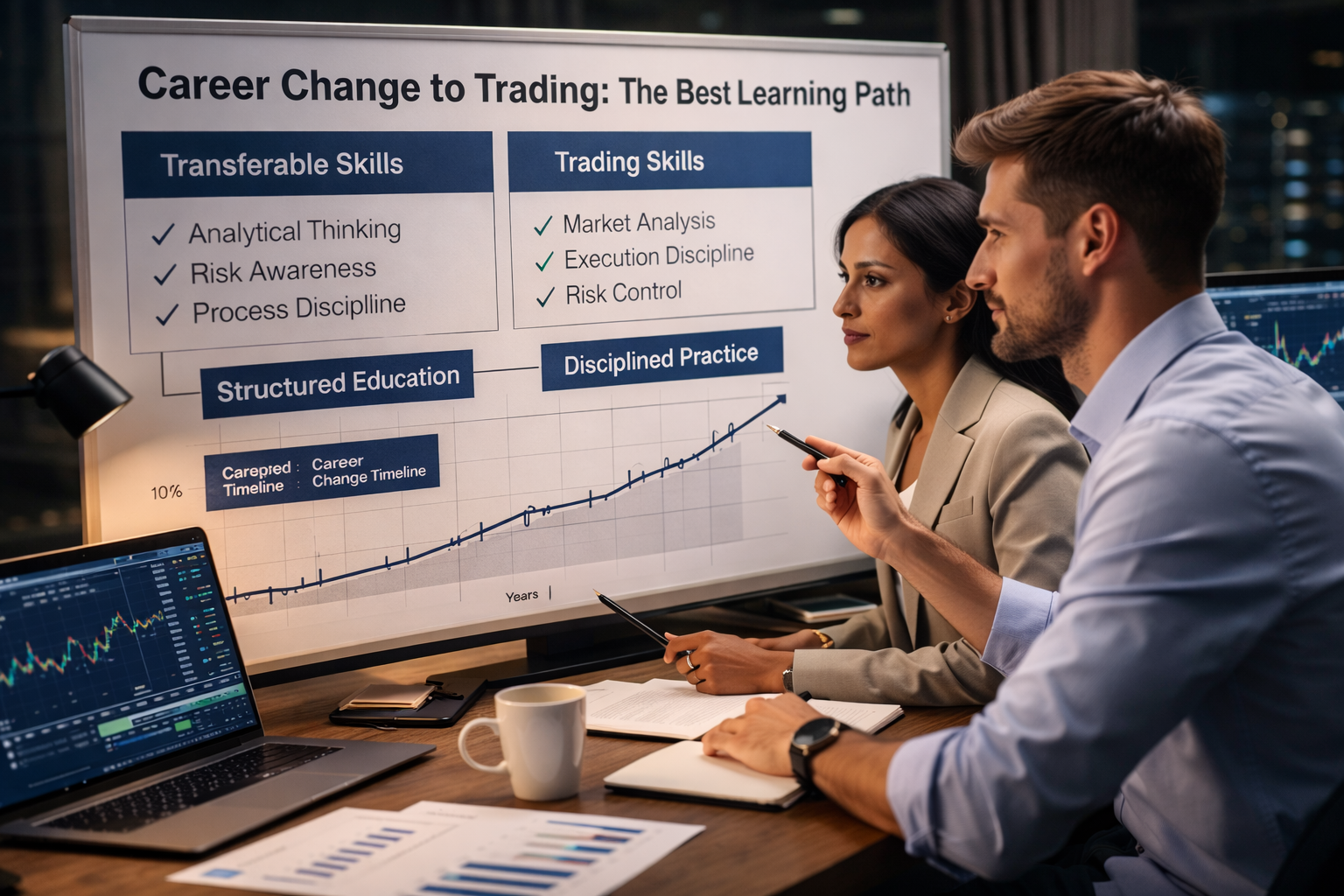
Switching careers into trading requires structured education, realistic timelines, and disciplined risk management. This guide explains the best trading education paths for career switchers and how professionals can transition into trading using institutional-style frameworks rather than retail shortcuts.
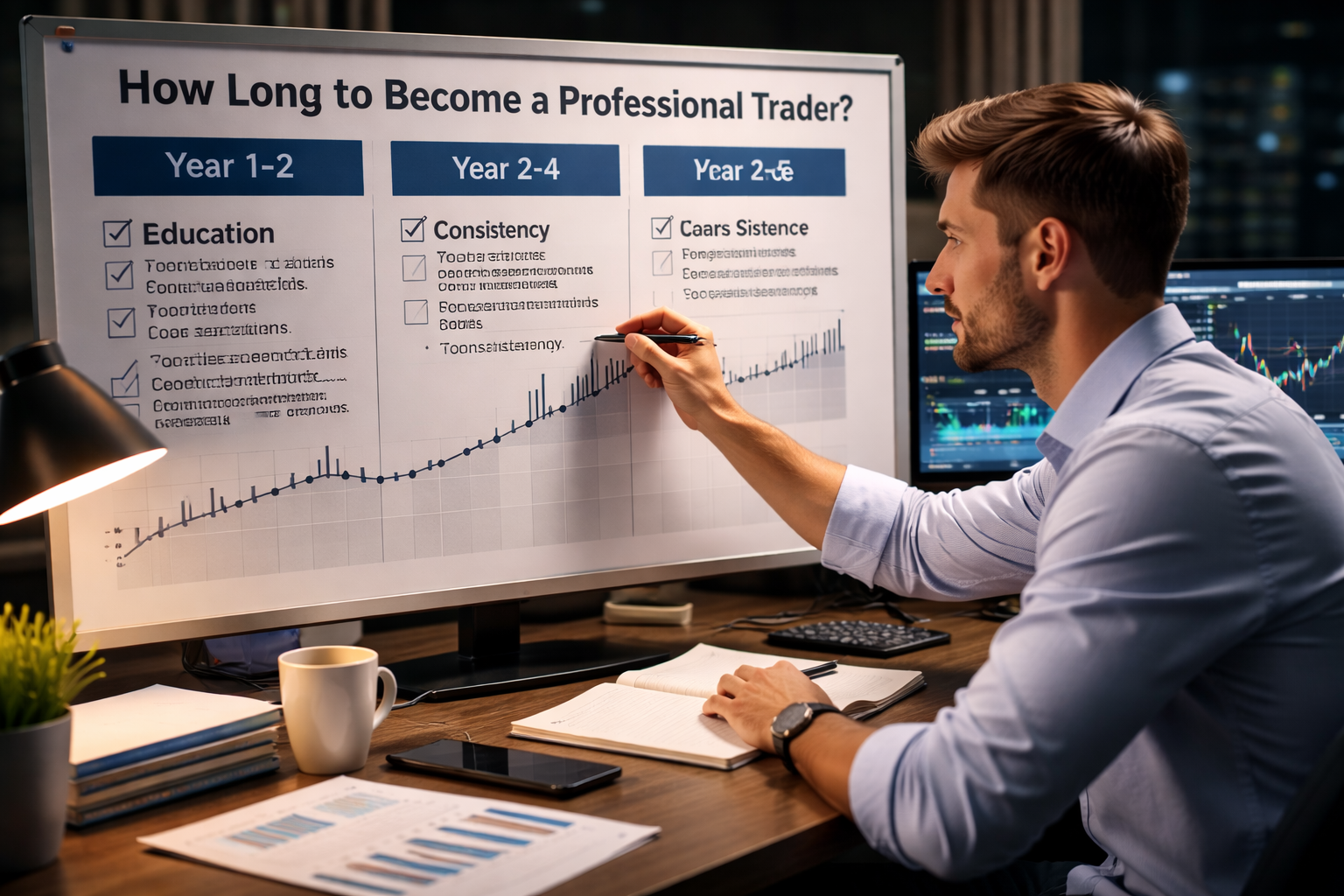
Becoming a professional trader takes years, not months. This guide explains realistic trading career timelines, the stages traders move through, and the education, discipline, and risk management required to develop consistent professional trading behaviour.